
Web design for Cambridge businesses
Cambridge is not a normal market town with a university glued on. It is a life-sciences cluster, a global tech scene, a college city and a tourist economy sharing the same postcode. Your website has to hold up against buyers from all four. We build sites that do.
Free strategy call. No hard sell.
or call 0800 699 0037
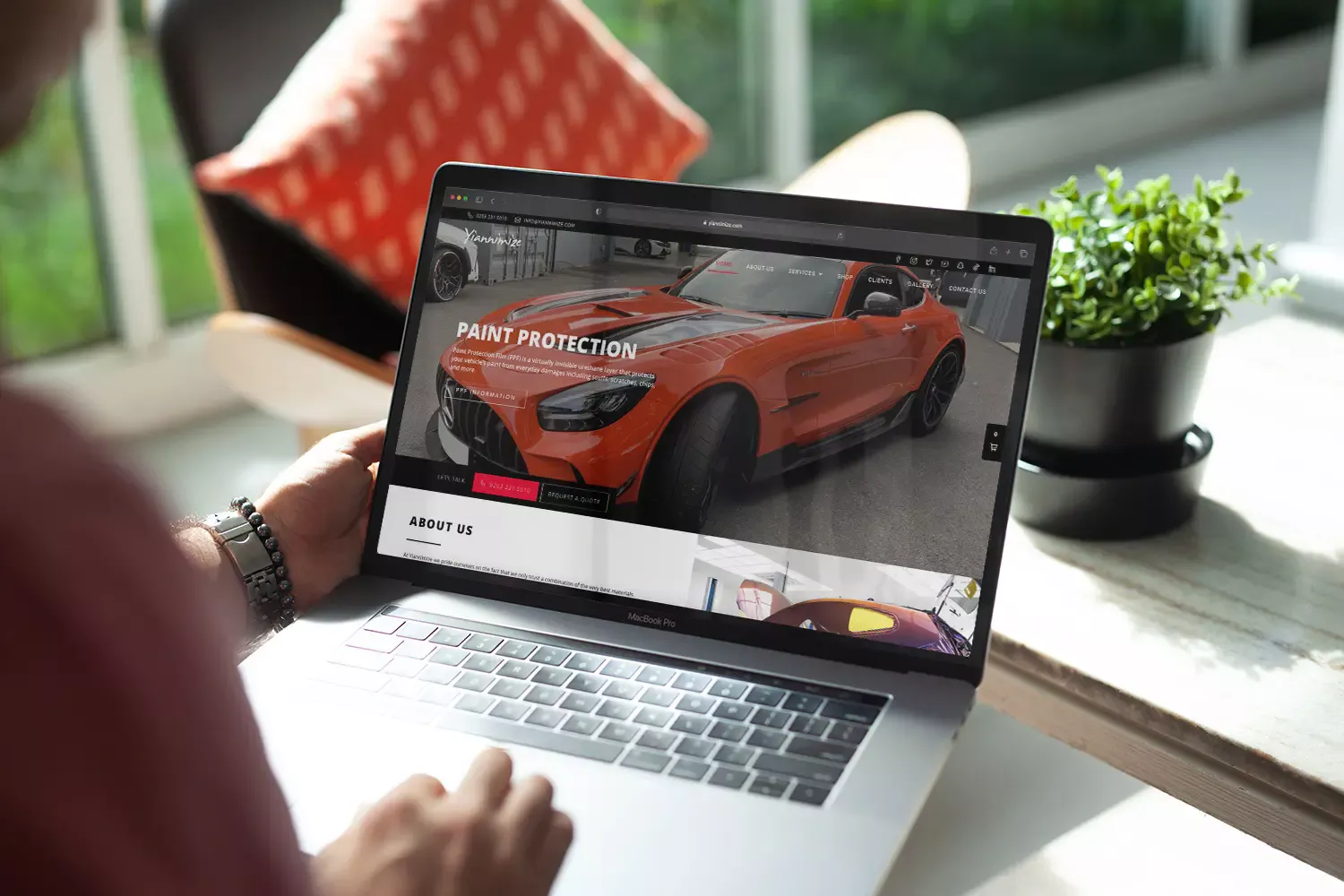
Web Design Cambridge
Let's get the honest bit out of the way first. We're Codesky, a Lincolnshire website design and digital marketing agency based in Grantham. We're roughly an hour up the A1 from Cambridge. We're not going to pretend we sit on Hills Road or that we drink our morning coffee on King's Parade. What we can do is build you a website that outperforms the Cambridge agencies charging two or three times the rate, and that reads like it was written by someone who actually understands who buys from you.
Cambridge is one of the most self-aware buying markets in the UK. Procurement teams at the Biomedical Campus, marketing leads at a Science Park spin-out, a college bursar, a bakery on Mill Road, and a punt-tour operator on Silver Street will all judge your website in the first five seconds. What convinces each of them is different. That is the actual job of the site, and it is what this page is about.

Our reach
Serving businesses across Cambridge
Whether you are based in the town centre or on the outskirts of Cambridge, we work with businesses of all sizes across the area. Most of our projects begin with a video call, so location is never a barrier to getting started.
We are based in Grantham, Lincolnshire, which puts us within easy reach of Cambridge for in-person meetings when needed.
Get in touchThe Cambridge Biomedical Campus at Addenbrooke's is the anchor for a life-sciences cluster that stretches out to Babraham, Granta Park, the Wellcome Genome Campus at Hinxton, and further afield to Melbourn. If your business sells into pharma, biotech, contract research organisations, or the NHS trust that sits on the campus itself, your website is not competing with high-street standards. It is competing with the internal purchasing standards of large research organisations.
That has three practical consequences for the site we build for you. First, the buying cycle is long and involves several people. The engineer or scientist who first lands on your page is not the person who signs the purchase order. Your site has to make sense to a lab head, a procurement officer, and a finance director, all of whom will read it separately. That means clear product or service categorisation, downloadable spec sheets or case studies, and pricing framing (even if not exact figures) that lets a buyer benchmark you internally.
Second, credentialing matters more than in almost any other UK market. Accreditations, ISO numbers, GxP compliance, data-handling statements, and named client references need somewhere to live on the site. Hidden in a PDF is not good enough. We build these into the design as first-class content, not footer decoration.
Third, the site has to survive being circulated by email. Half the sales journey happens when your first-line contact forwards your URL to a colleague. That means the homepage and every service page has to make sense cold, without the salesperson's context around it. We write and structure pages knowing they will be read that way.
Cambridge Science Park, St John's Innovation Centre, the Cambridge Innovation Park at Waterbeach, and the cluster around West Cambridge produce a steady stream of tech companies. Deep tech, quantum, semiconductors, AI tooling, agri-tech, med-tech, climate tech. Some are three people and a whiteboard. Some are twenty years old and turning over eight figures. What they share is buyers who are technical, sceptical, and very used to seeing bad marketing sites for good products.
The mistake most spin-out websites make is either being too academic to close a deal, or too glossy to be trusted. We aim for the middle, which is a site that respects the reader's technical literacy but still moves them toward a conversation. That means real explanations instead of buzzword salad, honest positioning against competitors, and a clear line from what you do to who it is for.
A lot of Cambridge-founded companies also sell internationally from day one. Your website is often the first (and sometimes only) touchpoint for a buyer in Boston, Basel, or Singapore. We build sites that load fast on international connections, hold up on translation review, and don't make British-market assumptions when your buyers aren't British.
Selling into the University of Cambridge or one of its 31 colleges is its own trade. Each college is a legal entity with its own bursar, its own budget cycle, its own preferred suppliers, and its own quirks. If you supply catering, maintenance, IT, construction, print, events, or professional services into that world, your website is doing a specific job: qualifying you for a shortlist before anyone picks up the phone.
That usually means proof of prior work at similar institutions, insurance and compliance information, safeguarding statements where relevant, and a way to signal that you understand the rhythm of college life (term dates, matriculation, congregations, Bumps, May Ball season). We build sites that speak that language without laying it on. If you already hold framework agreements with the University's procurement service or with individual colleges, we make sure the site says so clearly. That single fact often wins or loses the shortlist.
The buying cycle here is slow, sometimes very slow. Your site's job is to keep you credible during the wait, and to make the eventual RFP response easier because half the questions are already answered on the site.
The other Cambridge is the one visitors see. Punt tours, walking tours, King's College Chapel, the market, the independent shops on Bene't Street and Rose Crescent, the restaurants around Trinity Street, the pubs by the river. This economy is real money, and it is highly seasonal and highly mobile.
If you run a tour company, a restaurant, a boutique, a salon, or any consumer-facing Cambridge business, your website has a completely different problem to solve. Most of your traffic is on a phone, half of it is standing on the pavement outside deciding, and a lot of it is not British. The site has to load in under two seconds on a bad 4G signal from a phone that has been roaming since Heathrow. It has to make booking, opening hours, and location obvious without a scroll. And it has to work in Google's mobile results, because that is where the visitor is looking.
For the Mill Road independents, the North Cambridge trades, the Cherry Hinton and Chesterton locals, the story is different again. You are competing for people who live within a mile and search phrases like "electrician CB1" or "plumber Cambridge north". Your site has to be built for local SEO, with a properly configured Google Business Profile pointing at it, review markup where reviews exist, and service pages that describe your patch honestly.
Cambridge's catchment is not really Cambridge. It is the M11 corridor down to Stansted and London, the A14 across to Huntingdon, Bury St Edmunds and beyond, the A10 up to Ely and King's Lynn, and the fast trains to King's Cross and Liverpool Street. Anyone within an hour of the city on public transport is a plausible customer for a Cambridge-based service business.
That reality changes what your website has to say. If your target buyer commutes in from Saffron Walden, Royston, St Ives, or Newmarket, the site should acknowledge that. If your business is one that London buyers reach for because Cambridge is the closer specialist option, the site should say that too. We look at where your enquiries actually come from before we write a word of geography copy, and we build pages that match the real map, not a lazy 'Cambridge and surrounding areas' line at the bottom.
For distribution, logistics, or field-service businesses, the A14 corridor across to Felixstowe matters more than the city centre does. If that is you, the site should reflect it. Container volumes, warehousing space out at Bar Hill or Alconbury, and the drive time to the port are the things your buyers care about.
The technical part is quick to describe. Custom-coded WordPress, no page builders, no template themes, no plugins bolted on to compensate for weak foundations. Clean HTML, sensible schema, proper heading structure, images served in the right format and size, Core Web Vitals in the green. The kind of site that ranks in Google because it is easy for Google to read.
Hosting is on our own managed platform, which sits behind a UK CDN. Backups are daily. Security patching is included. Uptime is monitored. If something breaks at 2am on a Saturday, we know before you do.
What actually decides whether the site works is not the code. It is the strategy that comes before it. Every project starts with a proper conversation about who buys from you, what they need to see to trust you, and what action you want them to take. The design and the words and the structure all follow from those answers. That order matters. Reverse it and you get a pretty site that does not convert, which is what most Cambridge businesses already have.
A Cambridge-based agency has real advantages. They can meet you in person quickly. They know the streets. They may have worked with your competitor. What they do not have that we do is a lower cost base and a small deliberate client roster.
Central Cambridge property costs and Cambridge salary expectations get passed on. A website that costs eight or nine thousand pounds with a Grantham-based team can cost fifteen to twenty with a Hills Road one, for the same finished quality. That is not a criticism of Cambridge agencies. It is arithmetic.
We keep the roster small on purpose, so that Jordan, William, and Acer (founder, design lead, development lead) are the people you actually talk to and the people who actually do the work. No account manager layer, no junior hand-off after the sales pitch. If you are used to being sold to by one person and then handed to another, you will notice the difference on the first call.
Video calls handle 90% of the working relationship. Site visits happen when they need to. If you want to sit in the same room for a strategy session, the drive down the A14 and A1 is a couple of hours and we do it. We just don't bill for it.
A Codesky Cambridge website does one job well: it turns the right kind of visitor into an enquiry. Everything on the page is there for that reason. If a section is not helping a real buyer take a real next step, it comes out.
For a life-sciences supplier, that means a shortlisting site with real product depth, credentials in the right places, and a clear path to a technical conversation. For a spin-out, it means a positioning site that respects the reader and closes the gap between the technology and the buyer. For a tour company or a restaurant, it means a mobile-first booking site that loads before the tourist gives up. For a college supplier or a University-adjacent B2B, it means a shortlist-ready site that survives the bursar's inbox.
The build looks different in each case. The principle does not.

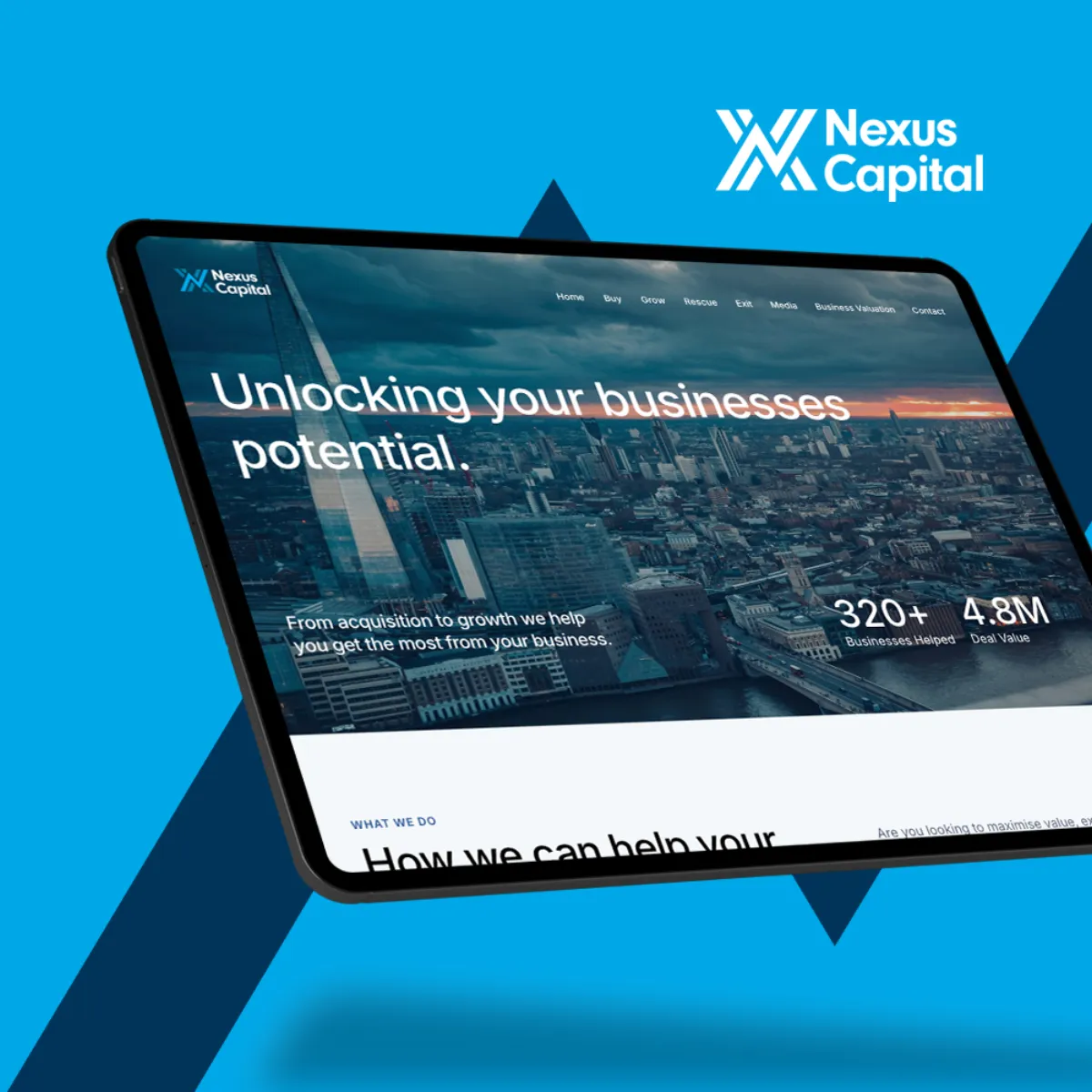
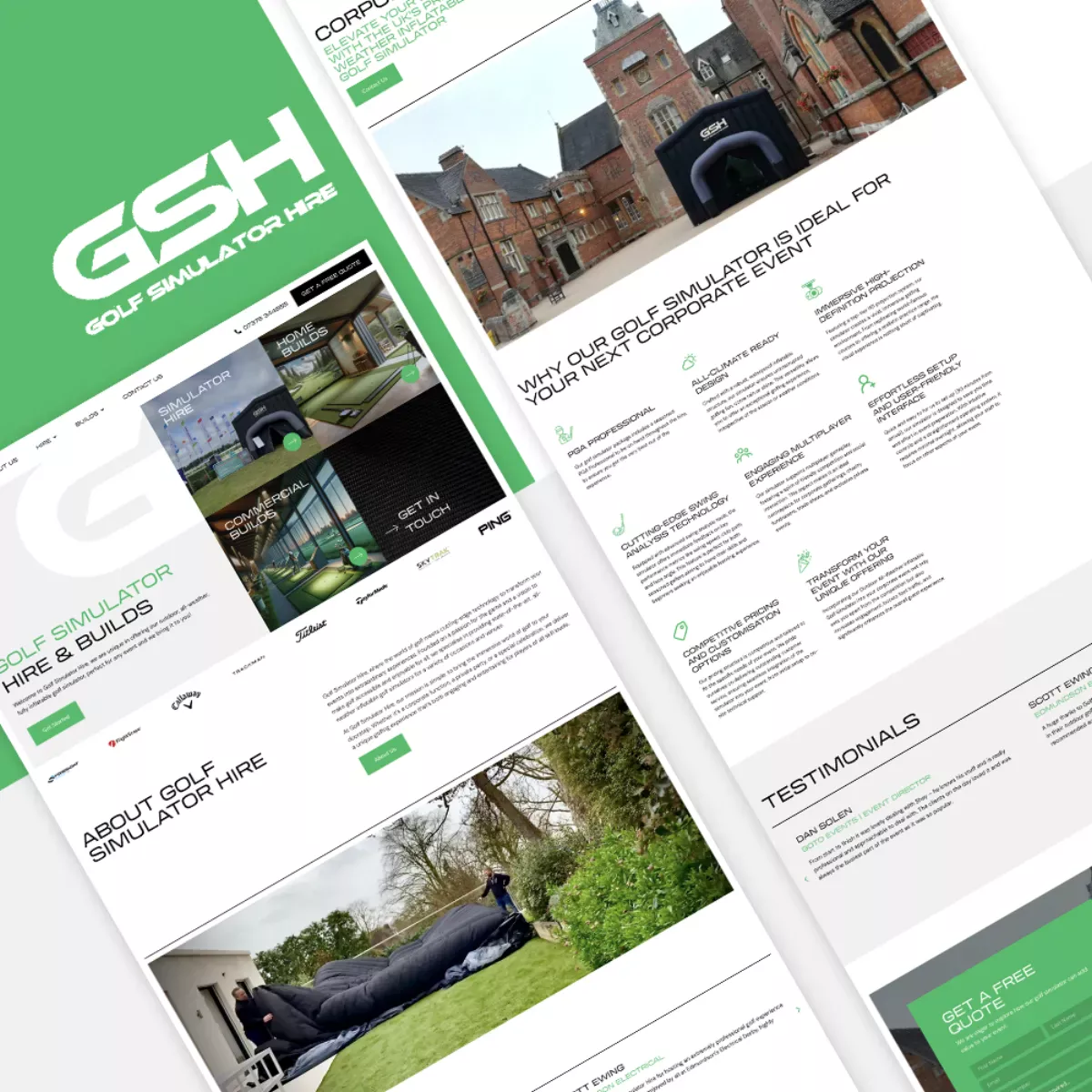
A selection of recent projects
From local tradespeople to national brands, take a closer look at the projects we have delivered and the results we have achieved.



Reviews
Why Codesky
Why Cambridge businesses hire us
We are not local, and we say so
Grantham, not Cambridge. You get better value and the same finished quality. We won't pretend otherwise.
Custom-coded, no page builders
Every site is built from scratch. No Elementor, no Divi, no theme framework. Clean code that Google can rank.
You talk to the people building it
Jordan, William, and Acer are on the calls and on the code. No account manager standing between you and progress.
Small roster, on purpose
We take on a limited number of Cambridge builds a year so we can do them properly instead of quickly.
Our approach
Why Cambridge businesses choose a Grantham-based agency
Working with an agency that is nearby but not on your doorstep has genuine advantages. You get a fresh perspective on your market, competitive pricing without the overheads of a city-centre office, and a team with no local conflicts of interest. We have been delivering results for businesses across the East Midlands for years, and our location in Grantham means we are always within easy reach of Cambridge when face-to-face meetings matter.
We work with businesses in Cambridge the same way we work with all our clients: directly, transparently, and with a focus on measurable outcomes. No account manager layers, no outsourced teams, no surprises.
How it works
Working with us from Cambridge
Free consultation
We start with a no-obligation conversation, either by video call or in person. We will learn about your business, your goals, and what you need from your website or marketing.
Strategy and proposal
We put together a clear proposal with a defined scope, timeline, and cost. No hidden fees, no ambiguity. You will know exactly what you are getting before you commit.
Design, build, and launch
We handle everything from design through to development and launch. You will see progress at every stage and have the opportunity to provide feedback throughout.
Ongoing support and growth
After launch, we do not disappear. We offer ongoing support, maintenance, and growth services to make sure your investment continues to deliver results.
Pricing
What does web design cost in Cambridge?
The cost of a website depends on what you need. A straightforward brochure site for a small business will cost less than a complex e-commerce platform or a site with custom integrations. We are transparent about pricing from the outset and will always give you a clear breakdown before any work begins.
Our detailed pricing guide covers typical project costs, what affects the price, and how to get the best value from your investment.
See our pricing guide
Your point of contact
Jordan Heppleston
Founder and lead developer
Jordan leads all web design and development projects at Codesky. With a background in custom WordPress development and front-end performance, he oversees every build from strategy through to launch.
Get in touch with JordanFAQs
01 You're in Grantham, not Cambridge. Does that actually matter?
For the finished website, no. For the process, only if you insist on regular face-to-face meetings, which most Cambridge clients don't once the project is underway. What you gain is a lower rate for the same quality, and a team that isn't stretched across too many local jobs. If it matters to you, we'll come to Cambridge for the kickoff and for any strategy session that genuinely needs a room. We don't charge for the trip.
02 Can you build a website for a Cambridge biotech or life-sciences company?
Yes. We've built for technical B2B buyers before and we understand the shape of the sale: multiple stakeholders, long cycles, procurement scrutiny. We'll structure the site so it works cold when a lab lead forwards the URL to a purchasing officer, with credentials, spec detail and case studies where a buyer expects to find them.
03 We're a Cambridge Science Park spin-out. How do you handle very technical products?
The rule is respect the reader. We won't dumb down the science and we won't hide behind it either. We write pages that explain what the product does and who it is for in plain language, with the technical depth reachable in one click for the reader who wants it. Your future buyer, whether they're in Cambridge, Boston or Basel, should get the point on the first read.
04 How do you compete with the big Cambridge agencies on Hills Road?
We don't try to be the same thing at a lower price. We're a small deliberate team with a lower cost base and a very direct working relationship. If you want a large agency structure with account managers and workshops, we're not that. If you want the founder and the leads on your calls and your build, that's us.
05 Can you take over an existing Cambridge business's website?
Yes. Redesigns and takeovers are a big part of what we do. We audit what you have, preserve the SEO equity that's worth keeping, redirect properly, and rebuild what's underperforming. If your current site was built on a page builder or an off-the-shelf theme and it's slow or hard to update, that's a common starting point.
06 Do you build for consumer businesses like tour operators, restaurants and shops in central Cambridge?
Yes. That work looks very different to a B2B build. Mobile-first, fast on a poor 4G signal, booking or ordering front and centre, and structured so it shows up in Google's local results for tourists searching in the moment. If you rely on visitor footfall or last-minute bookings, the site has to earn the sale before someone walks past your door.
07 Do you handle SEO and Google Ads for Cambridge as well?
Yes. Both. SEO is built into the site from the start and we run local SEO and technical SEO campaigns after launch when it makes sense. Google Ads is often the right first move for a new Cambridge site that needs enquiries before SEO catches up. We're Google Ads certified and we run both in-house rather than reselling.
08 What does a website cost, roughly?
A brochure or service site for a small Cambridge business is typically in the low-to-mid four figures. A larger business site with detailed service pages, integrations and content sits in the mid-to-high four figures. E-commerce and technical B2B builds run higher and depend on scope. We give a fixed quote after a proper conversation, so there are no surprises.
09 How long does a Cambridge website project take?
Four to six weeks for a standard brochure or service site. Eight to twelve for a larger build with more content, more pages or e-commerce. We agree the timeline at the start and hold ourselves to it. Delays usually come from content sign-off on the client side, so we plan for that early.
Talk to us about your Cambridge website
A short call, no pressure. We'll look at what you've got, what your Cambridge buyers actually need, and whether we're the right team for it. If we're not, we'll tell you.
Book a Cambridge strategy call