That’s the honest short answer, and it’s the one we give every client before they sign. The longer answer is that the timeline depends on four things you can assess before you start, and once you understand them you can judge a realistic timescale for your own site rather than take anyone’s word for it, including ours.
Why SEO is slow
Google doesn’t rank a page the moment it’s published. It has to find the page, read it, work out what it’s about, compare it with every other page on the same subject, and decide how much to trust the site it’s on. Trust is the slow part. It’s built from signals that accumulate over time: other sites linking to you, people clicking your result and staying, reviews, consistent business details, content that keeps being useful. None of that can be rushed, and attempts to rush it (buying links, stuffing keywords, publishing fifty thin pages in a week) tend to go backwards.
So SEO works like compound interest. Slow at first, then faster, and the gains you’ve built keep paying after the work stops. That’s also why it’s worth doing: unlike advertising, the traffic doesn’t vanish when you stop paying.
The four things that decide your timeline
How competitive your searches are. Ranking for “electrician Sleaford” is a different job from ranking for “personal injury solicitor”. The first has a handful of serious competitors; the second has national firms with large budgets. Local searches in smaller towns move fastest. National, commercial searches move slowest.
Where your site is starting from. A site that’s been live for years, with some links and a clean technical set-up, has a head start. A brand-new domain is starting from nothing, and Google is cautious with new sites. A site with technical problems (slow, pages Google can’t index, duplicate content) has to have those fixed before anything else counts, which can add a month or two at the beginning.
How much authority your site has. This is Google’s shorthand for trust: how many reputable sites link to yours, how established it is, how consistently it’s been maintained. A site with authority can publish a new page and rank it in weeks. A site without it can publish the same page and wait months.
How much work goes in. SEO is cumulative. A site getting technical fixes, new content, local work and link building every month moves faster than one getting a blog post a quarter. The budget decides the pace, which is why we’re honest about what a given monthly fee can and can’t do.
A realistic month-by-month timeline
For a local business with an existing site in a moderately competitive market, this is roughly what we’d expect. Your mileage will vary with the four factors above.
Month one: audit and fixes. We crawl the site, go through Search Console and Analytics, and fix the technical problems that would hold everything else back. You’ll see changes to the site but not much in the rankings yet.
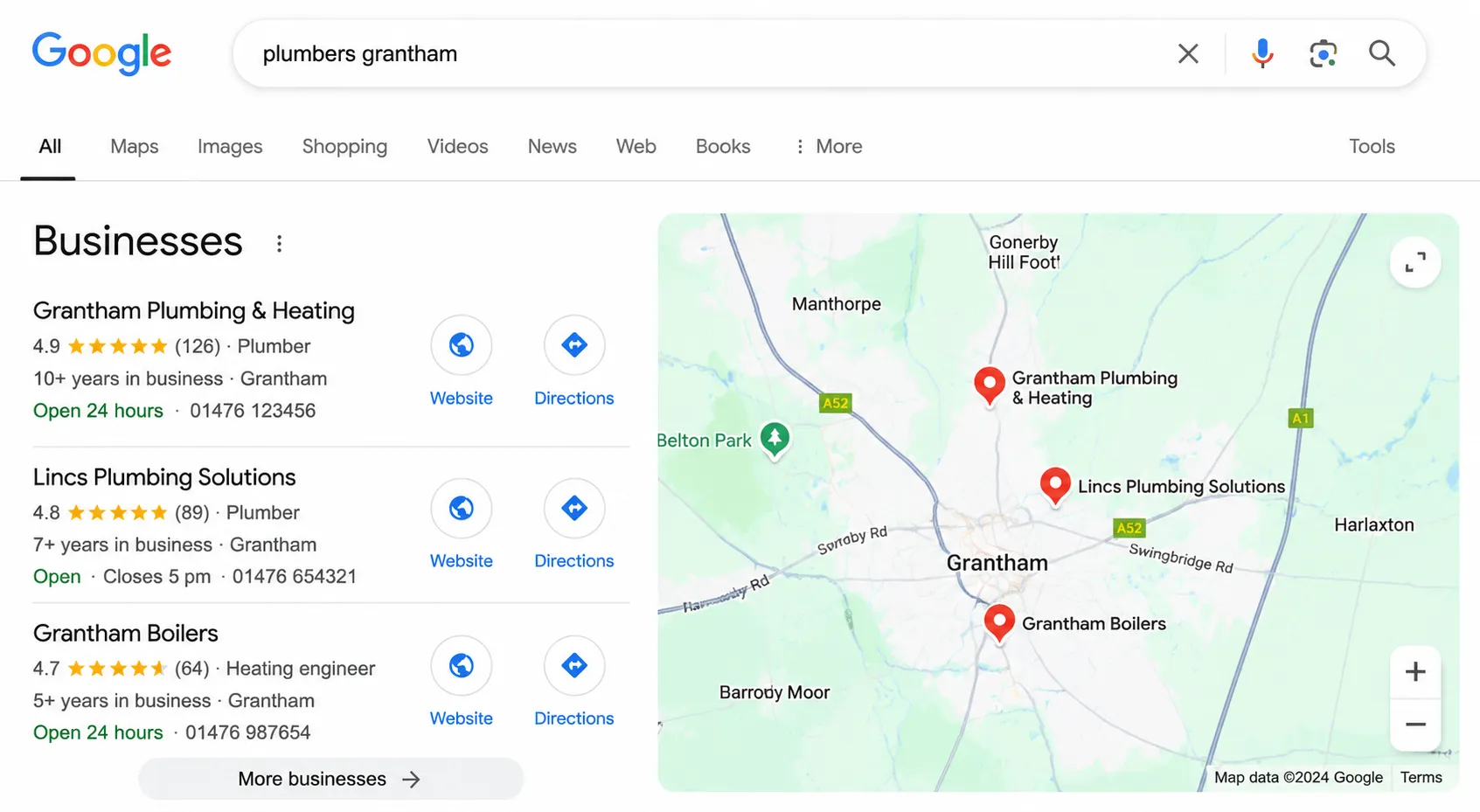
Months two and three: foundations. Google Business Profile set up properly, business details made consistent, the main service pages rewritten around what people actually search, internal links sorted. Local rankings often start to move here, especially in Maps. Organic traffic may tick up.
Months four to six: building. New content for the searches you’re missing, links earned from relevant sites, reviews coming in. This is where most clients see clear movement: more searches on page one, more organic enquiries. Buildable reached 20+ local leads a month from a standing start in this window.
Months six to twelve: compounding. Competitive terms start to move. Organic becomes a reliable source of enquiries rather than a bonus. The work shifts from fixing to growing.
Beyond a year: the gains hold and build. Mobiquip’s organic search orders more than doubled year on year in September 2026, after years of steady work on product pages and content.
What you should see in the first 90 days, and what you shouldn’t
You should see the technical fixes done and documented. You should see your Google Business Profile looking complete and active. You should see pages being rewritten and new ones planned. You should see your rankings tracked and reported honestly, including the ones that haven’t moved. You may see early movement in local results.
You shouldn’t see page one rankings for competitive terms. You shouldn’t see a sudden spike in traffic (if you do, ask where it came from). And you shouldn’t see a report full of green arrows with no enquiries behind them.
Why “guaranteed first page” is a warning sign
Nobody controls Google’s rankings except Google, and it changes how it decides them constantly. An agency guaranteeing a first-page position is either guaranteeing it for a search nobody makes, or planning to use methods that work briefly and then get the site penalised. We’ve been asked to clean up after both. What a good agency can guarantee is the work: what will be done, when, and how it’ll be reported.
When to run ads alongside
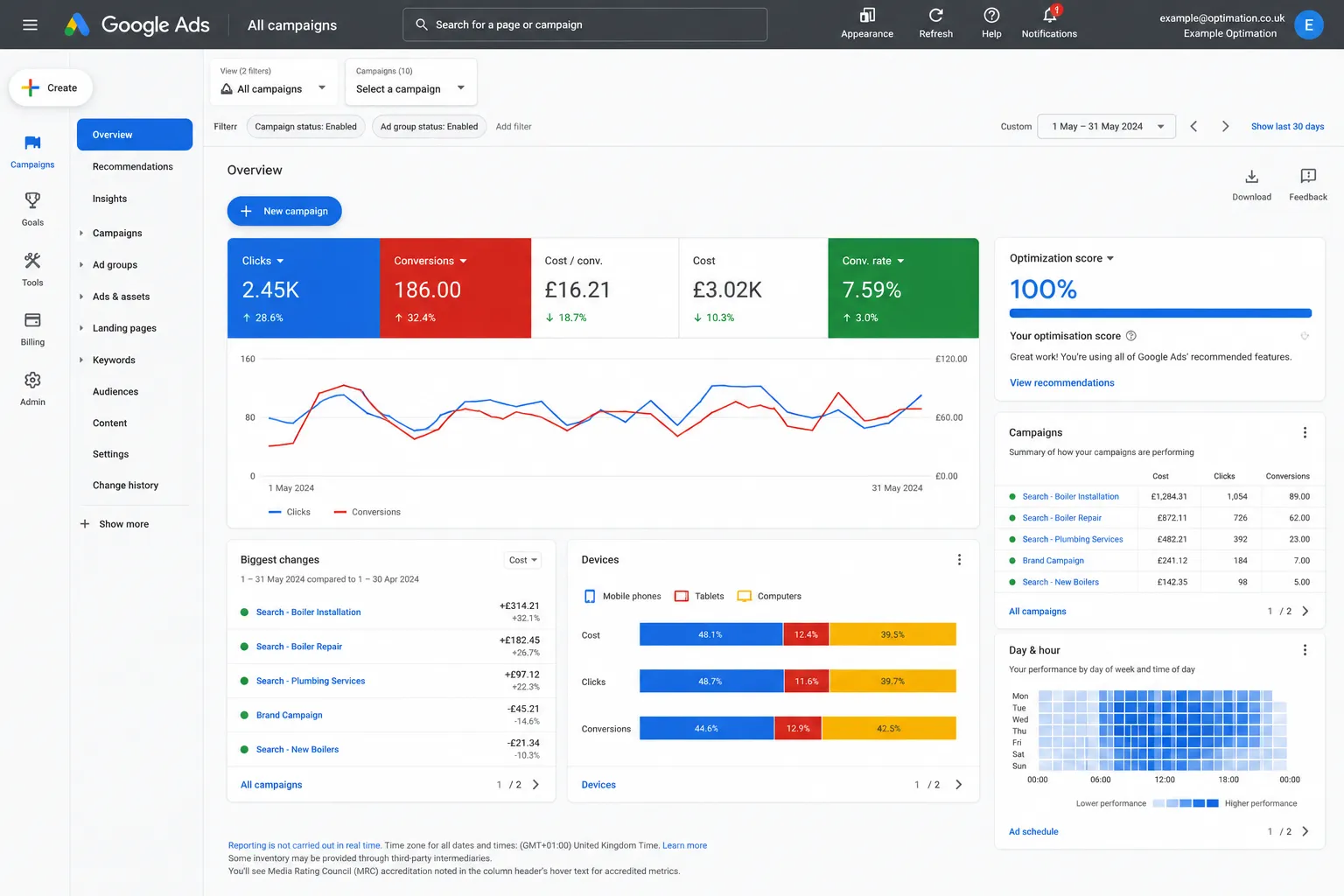
If you need enquiries this month, SEO won’t deliver them. Google Ads will, from the day the campaign goes live, and they stop the day you stop paying. A lot of our clients run both: ads for enquiries now, SEO for enquiries later, with the ad budget coming down as organic takes over. Cube Branding, BJC Electrical and Tuerner & Co all ran that way.
The short version
Expect movement in three to six months, real results in six to twelve, and ask anyone who promises faster what they’re going to do differently. If you’d like an honest estimate for your own site, send us the address and we’ll tell you after the audit. Ring 0800 699 0037 or email hello@codesky.co.uk.
One more thing: more people now ask ChatGPT or Google’s AI Mode for a recommendation instead of searching, and the same groundwork is what gets you named in those answers, which we cover on our AI SEO services page.