
Choosing a web design agency is one of the more consequential decisions you will make for your business. Your website is often the first impression potential customers get, and the agency you choose will determine whether that impression builds trust or drives people away. We have worked with plenty of clients who came to us after a bad experience elsewhere, and the stories are remarkably consistent. So we wrote this guide to help you avoid the same mistakes.
Whether you are building your first business website or replacing one that is not performing, this guide will walk you through exactly what to look for, what to ask, and what should make you walk away.
What to Look for in a Web Design Agency Portfolio
The portfolio is usually the first thing people check, and rightly so. But most people look at it the wrong way. They focus on whether the designs are attractive. That matters, but it is only part of the picture.
Here is what you should actually be evaluating when you review an agency’s portfolio:
- Variety of industries. If every site in the portfolio looks the same, that is a sign the agency applies the same template to every client. You want to see evidence they tailor their approach to different businesses and different audiences.
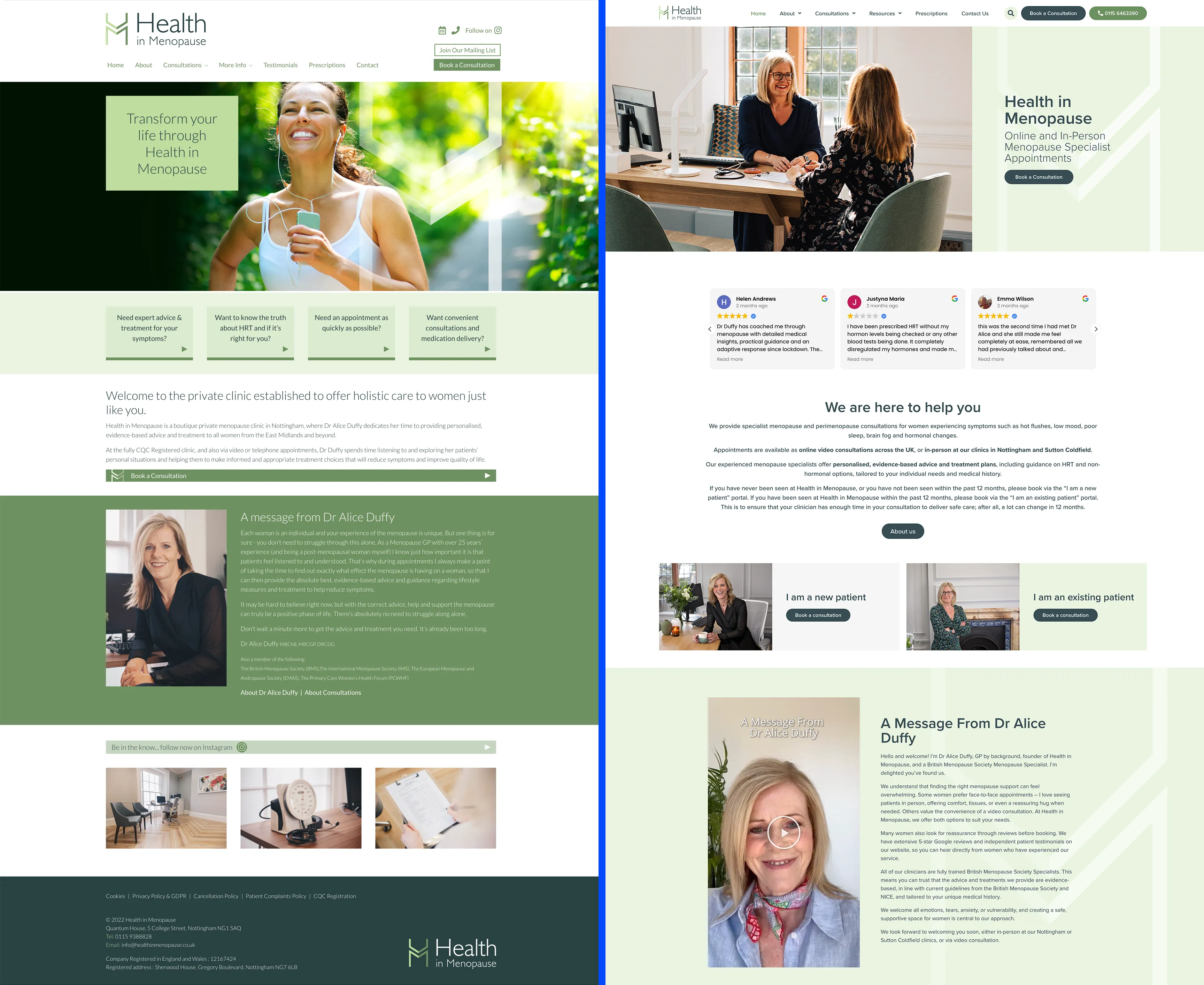
- Live websites, not just screenshots. Visit the actual sites. Check how they load on mobile. Click around. See if they still look good and function properly six months or a year later. A portfolio full of screenshots might be hiding sites that were never finished or have since broken.
- Evidence of strategy, not just design. Good agencies explain why they made certain choices. Look for case studies that talk about the business goals, the challenges, and how the design addressed them. If all you see is “we made it look nice,” that tells you the agency thinks in terms of aesthetics rather than results.
- Sites in your sector or of similar complexity. If you run an e-commerce business, look for e-commerce projects. If you need a booking system, look for sites with similar functionality. Relevant experience reduces risk significantly.
In our experience working with businesses across Lincolnshire and beyond, the agencies that produce the best results are the ones who can explain the thinking behind their work, not just show you the finished product. We have seen portfolios full of beautiful sites that generated zero leads, and simpler sites that converted visitors consistently because the strategy was right.
Questions to Ask Before Signing With a Web Design Agency
The questions you ask during the sales process will tell you more about an agency than their website ever will. Here are the ones that matter most, and why.
1. Who will actually be working on my project?
This is crucial. Many agencies have a polished sales team that disappears after you sign the contract. You want to know who the designer is, who the developer is, and who your day-to-day contact will be. Ideally, you should speak to them before committing. We have had clients come to us after discovering their “senior designer” was actually a freelancer the agency had never worked with before.
2. What does your process look like from start to finish?
A good agency will have a clear, documented process. They should be able to explain the stages: discovery, wireframing, design, development, content integration, testing, launch, and post-launch support. If the answer is vague or sounds improvised, that is a concern. Process discipline is what separates agencies that deliver on time from those that drag projects out for months.
3. What CMS will you build on, and will I be able to update it myself?
You should own your content management system and be able to make basic updates without calling the agency every time you need to change a phone number. WordPress powers roughly 40% of the web for good reason: it is flexible, well-supported, and most people can learn to use it. Be wary of proprietary platforms that lock you in and make it expensive or impossible to leave.
4. What happens if the project goes over scope?
Scope creep is the single most common cause of web projects going wrong. A good agency will have a clear change request process. They should explain how additional work is quoted and approved so there are no surprises on the final invoice. We always document scope explicitly at the start of a project and provide written quotes for anything that falls outside it.
5. What are the ongoing costs after launch?
Hosting, maintenance, security updates, SSL certificates, domain renewals. Ask for a full breakdown of what you will pay monthly or annually after the site goes live. Some agencies bundle these into a monthly fee. Others charge separately. Neither approach is inherently wrong, but you need to know what you are committing to before you sign.
6. Can you show me results, not just designs?
We have seen agencies with beautiful portfolios that have never generated a single enquiry for their clients. Ask for specific outcomes. Did the new site increase enquiries? Did it improve search rankings? Did bounce rates go down? Did page speed improve? If the agency cannot answer these questions, they probably are not measuring them, and that tells you where their priorities lie.
Red Flags That Should Make You Walk Away
After years of hearing stories from clients who came to us following bad experiences, we have compiled a list of warning signs that almost always lead to trouble.
- No contract or a very vague one. A proper agency will have a clear contract covering scope, timelines, payment terms, intellectual property, and what happens if things go wrong. If they want to start work on a handshake, walk away. We have seen businesses lose thousands because nothing was in writing.
- Rock-bottom pricing. If a quote is dramatically lower than everyone else, ask yourself why. The usual answer is that they are using a cheap template, outsourcing the work to the lowest bidder overseas, or planning to make up the difference in ongoing fees. A 500 pound website will cost you far more in the long run when you have to rebuild it properly.
- They cannot show you live examples of their work. This usually means the sites did not turn out well, the clients left, or the work does not exist. Any agency worth hiring will have at least 5 to 10 live sites they are happy to show you.
- Pressure to sign quickly. “This price is only available this week” is a sales tactic, not a genuine offer. Good agencies have enough work that they do not need to pressure you. Take your time. Compare options. A legitimate agency will respect that decision-making process.
- They do not ask about your business goals. If the first conversation is about colours and fonts rather than your customers, your revenue targets, and your competitive landscape, the agency is not thinking strategically. A good website starts with understanding the business it serves.
- No mention of mobile responsiveness or performance. Over 60% of web traffic in the UK now comes from mobile devices. If the agency does not proactively discuss mobile design and page speed, they are not building to modern standards. Google uses mobile-first indexing, which means a poor mobile experience directly hurts your search rankings.
- They own your domain or hosting. Your domain name and hosting should be in your name, on your accounts. Some agencies register these under their own accounts, which means you cannot leave without their cooperation. This is a significant red flag that we see more often than you would expect.
Understanding Web Design Proposals and Quotes
When you start requesting quotes, you will quickly notice that proposals vary enormously in format, detail, and price. Here is how to make sense of them and compare fairly.
What a good proposal should include
- A clear breakdown of what is included: number of pages, features, specific functionality
- The technology stack: CMS, hosting environment, any third-party tools or integrations
- A realistic timeline with key milestones and your responsibilities at each stage
- Payment terms: how much upfront, when the balance is due, payment schedule for larger projects
- What is explicitly not included: so you know where the scope ends
- Post-launch support: what is covered, for how long, and what happens after that period ends
- Revision rounds: how many design revisions are included before additional charges apply
Comparing quotes fairly
Do not compare on price alone. A 3,000 pound quote and an 8,000 pound quote might be for fundamentally different levels of work. The cheaper option might use a pre-built template with minimal customisation. The more expensive one might include a full discovery phase, custom design, content strategy, SEO foundation, and 12 months of ongoing support.
We always recommend creating a comparison spreadsheet. List the key deliverables across the top and the agencies down the side. This forces you to compare like for like and makes it much easier to see where the real value sits. Include items like: number of bespoke page designs, content creation, SEO setup, training, post-launch support hours, and hosting costs.
Fixed price vs. time and materials
Fixed-price projects give you cost certainty but less flexibility. If you want to add features mid-project, you will be paying for change requests on top of the agreed price. Time-and-materials projects offer more flexibility but less predictability on the final cost. For most small to medium business websites, fixed price with a clear change request process is the safest option. We use this approach for the majority of our projects because it gives both sides clarity.
Why Local Agencies Sometimes Beat National Ones
There is a reason we set up our website design service in Lincolnshire rather than trying to compete in London. Local agencies have genuine advantages that national firms struggle to replicate.
Communication and accessibility
Being able to sit in the same room as the people building your website changes the dynamic entirely. Misunderstandings get resolved faster. Feedback is clearer and more nuanced. And there is an accountability that comes from working with people in your community that you simply do not get when your agency is 200 miles away. We regularly meet clients in person for kickoff meetings and design reviews, and the projects always run more smoothly because of it.
Understanding your market
A local website design agency in Lincolnshire understands the local market. We know who the major competitors are in different sectors, what customers in this region expect, and how the business landscape works here. A national agency working from a brief will never have that depth of understanding. When we build a site for a Lincolnshire business, we are drawing on years of experience working in this market.
Ongoing relationship
Websites are not “build and forget” projects. They need ongoing updates, maintenance, and periodic improvements. Having an agency nearby that you can call, email, or visit makes the long-term relationship much smoother. We have clients we have worked with for three, four, five years and beyond, and the relationship works because we are accessible and genuinely invested in their ongoing success.
When national makes more sense
That said, there are situations where a national agency is the better choice. If you need very specialised expertise, like a particular enterprise e-commerce platform or a complex CRM integration, or if you operate nationally and need an agency with experience managing multi-location, high-traffic websites, a bigger agency with a wider talent pool might be the right call. The key is matching the agency’s strengths to your actual needs, not their marketing promises.
Checklist: 10 Things to Check Before Committing
Before you sign anything, work through this checklist. If you can tick every box, you are in a strong position to make a confident decision.
- You have visited live websites they have built and they load quickly, look professional, and function properly on mobile devices.
- You know exactly who will be working on your project and you have had a conversation with them, not just the sales team.
- Their contract is clear and comprehensive, covering scope, timelines, payment terms, IP ownership, and what happens if things go wrong or either party wants to end the relationship.
- You will own your domain, hosting, and content, and you can take the website with you if the relationship ends.
- The proposal breaks down exactly what is included so you can compare it fairly against other quotes you have received.
- They have asked detailed questions about your business, including your goals, your customers, your competitors, and your budget constraints.
- They have a documented process with defined stages, milestones, and a realistic timeline that accounts for your input at each stage.
- They can show you measurable results from previous projects, not just attractive visual designs.
- Ongoing costs are transparent, with a full breakdown of hosting, maintenance, support fees, and any annual renewals.
- Your gut feeling is positive. This matters more than people think. If something feels off during the sales process, it usually gets worse once the project starts. Trust your instincts.
Making Your Final Decision
After you have reviewed portfolios, asked your questions, compared proposals, and worked through the checklist, you should have a clear picture of which agency is the right fit for your project and your business.
The best agency for you is not necessarily the cheapest, the most expensive, the biggest, or the most local. It is the one that best understands your business, communicates clearly, has a track record of delivering real results, and feels like a genuine partner rather than just a supplier waiting for an invoice.
If you are looking for a website design agency in Lincolnshire that takes this approach, we would be happy to have a conversation. No pressure, no sales pitch. Just an honest discussion about what you need and whether we are the right fit. Get in touch and we will take it from there.