Accountants

Web design for accountants: Websites built for trust, compliance and client acquisition

Accounting is a profession where trust is everything and differentiation is hard. The firms that win online are the ones whose websites communicate their specialisms, their credentials and the way they actually work. We build sites for accountants that do exactly that.

Web design for accountants: Websites built for trust, compliance and client acquisition

Web Design for Accountants

Most accountancy firm websites look broadly the same. A homepage promising a friendly, proactive team. A services page listing tax, bookkeeping, payroll and accounts. Stock photography of people pointing at laptops. A form that may or may not get answered. It's the online equivalent of a beige waiting room, and it's the reason so many practices struggle to bring in the sort of clients they actually want.

The firms that stand out do the opposite. They are specific about who they help, they publish real detail about how they work, they show their credentials properly, and they treat their website as a serious piece of client-acquisition infrastructure rather than an online business card. That's what we build.

We're Codesky, a Lincolnshire website design and digital marketing agency based in Grantham. This page is a longer read than most agency pitches because accountancy websites have real requirements attached to them, from Making Tax Digital and ICAEW rules through to the GDPR obligations that come with holding client financial data. If you'd rather skip the detail and talk to us, the number is 0800 699 0037.

Web design for accountants: Websites built for trust, compliance and client acquisition

How clients actually look for an accountant online

The person searching for an accountant is not one person. They're several very different people with different problems, and they type very different things into Google. Understanding those searches is the starting point for any website that wants to earn work rather than sit there.

The self-employed contractor looking for help with a self-assessment return types "self assessment accountant" or "self assessment help near me". The limited company director dealing with a first year of accounts types "limited company accountant" or "small business accountant [town]". The landlord who's just bought a second buy-to-let types "property accountant" or "landlord tax return". A restaurant owner who's fallen behind on VAT types "VAT accountant" or "help with VAT return". A growing e-commerce brand types "ecommerce accountant" or "Shopify accountant". None of those people want the same page.

A single homepage that says "we do tax, VAT, payroll, bookkeeping and accounts" tries to be relevant to all of them and ends up ranking for none of them. Google's job is to match a query with the most specific page it can find. If your competitor has a dedicated page on VAT registration for e-commerce sellers and you have a bullet in a list, they'll win that search every time.

This is why serious accountancy sites are structured around service pages, not service bullets. Which brings us to the biggest single change we make on most firms' websites.

The case for a page per service (not a bullet list)

The single most common mistake we see on accountancy websites is compressing the entire service range into one page or, worse, one paragraph. It feels tidy. It ranks for nothing.

A proper accountancy site has a dedicated page for each service the firm genuinely wants to attract work in. That usually means Self-Assessment, VAT Returns, Limited Company Accounts, Corporation Tax, Payroll, Bookkeeping, Management Accounts, CIS for the construction sector, and Tax Planning. Firms with sector specialisms should also have sector pages: accountancy for landlords, for e-commerce, for hospitality, for farming, for contractors under IR35. Each page targets a real search phrase, answers the questions someone with that problem actually has, and gives Google something concrete to rank.

The benefits stack up quickly. You rank for more searches because you have more pages targeting more queries. Prospective clients self-qualify before they call because they've read your take on their specific problem. Existing clients cross-refer because they can send a friend a link that goes straight to the service. And you build internal authority: a strong Self-Assessment page can link to a strong VAT page can link to a strong Limited Company Accounts page, and search engines follow those signals.

The counter-argument we hear is "but our clients need to speak to us to know what's relevant". That's true of the engagement itself. It isn't true of the search. If someone can't tell from your website whether you handle CIS, they won't call to find out. They'll call the firm whose page is called CIS Accountants.

You can see how we think about this on our website design and SEO pages. The page-per-service structure isn't an accountancy-only idea, but it matters more here than in most industries because the search demand splits so cleanly by tax type.

Making tax digital, HMRC and the software question

Making Tax Digital has quietly rewired what accountancy clients expect. VAT-registered businesses have been submitting digitally since 2019. MTD for Income Tax Self Assessment is rolling in from April 2026 for sole traders and landlords over the £50,000 threshold, with the £30,000 threshold following in 2027. Every practice we speak to is either mid-migration or dealing with the fallout of one.

That has implications for your website that most firms haven't thought through. Clients now expect to see which cloud accounting platforms you work with: Xero, QuickBooks, FreeAgent, Sage, and often a bookkeeping layer like Dext or Hubdoc on top. A prospective client on Xero doesn't want to move. If your site doesn't mention Xero anywhere, they'll assume you don't support it and move on. We build a software-partners section into every accountancy website that names the platforms honestly. If you're a Xero Platinum Partner or a QuickBooks ProAdvisor, say so and link the badge to the partner directory listing. Trust is built out of verifiable specifics.

MTD also creates whole categories of search demand that didn't exist five years ago. "MTD for landlords", "digital record keeping for sole traders", "quarterly updates HMRC", "MTD compatible software". Practices that publish clear, useful pages on those queries pick up clients who are actively worrying about a rule change and looking for a firm that already understands it. Practices that ignore MTD on their website end up explaining the basics to every enquiry.

Displaying ICAEW, ACCA, AAT and CIOT credentials properly

Accountancy is a regulated space with visible credentials, and your website should treat those credentials as trust anchors, not decoration. There are firm rules to follow and there is good practice on top.

If your practice is a member firm of ICAEW, ACCA or CIMA, you have logo usage rules to comply with. ICAEW member firms use the Chartered Accountants logo with the practice name; ACCA-regulated firms display the ACCA logo alongside the firm reference; AAT-licensed accountants have their own licence mark. The bodies publish full guidance on colour, spacing and placement, and getting it wrong looks unprofessional to anyone in the profession. We build to the current guidelines and check membership status before publishing.

Beyond the logo work, the credentials worth surfacing on an accountancy website include: ICO registration number (required for anyone holding client personal data), professional indemnity insurance details, AML supervisor (either HMRC or the accountancy body), CIOT membership for tax specialists, and any partnerships with platforms such as Xero, QuickBooks and FreeAgent. Together these signals answer the unspoken question every new client asks: "is this a proper firm?"

Put the credentials in the footer on every page and expand on them on an About or Credentials page. The About page is one of the highest-read pages on any accountancy website. Treat it as such.

GDPR, client data and the shape of your website

Accountancy firms hold some of the most sensitive personal and financial data any small business will ever handle. UK GDPR and the Data Protection Act 2018 apply from the first enquiry, which means your website is a data-processing activity in its own right. This isn't paperwork. It shapes real decisions about how the site is built.

Contact forms and quote forms collect personal data the moment they're submitted. That means a lawful basis (usually consent or legitimate interest), a clear privacy notice at the point of collection, and a real route through to your ICO registration and DPO or data lead. Forms that ship the enquiry off to a generic inbox with no encryption are still common on accountancy sites and shouldn't be.

Client portals are the next question. Many firms use platforms like IRIS OpenSpace, Xero HQ, Karbon or Ignition for secure document exchange. If yours does, the portal login should be prominent, secure (HTTPS with a valid certificate, no mixed content) and clearly signposted. If it doesn't, the site should explain how sensitive documents are actually exchanged. Emailing bank statements as PDF attachments is not a good look in 2026.

Cookie consent is the other frequent failure. The ICO's position on cookies has tightened, and non-essential cookies (analytics, marketing pixels, chat widgets) require prior consent before they fire. A properly configured consent banner is a small job that a lot of accountancy sites still get wrong, and it's exactly the sort of thing a compliance-conscious client will notice.

We build these things in from day one rather than bolting them on. It's cheaper and it looks like you meant it.

Cybersecurity: Why accountancy sites get targeted

Accountancy firms are a favourite target for phishing, invoice fraud and credential theft, because criminals know that a compromised accountant is a route into every one of their clients. Your website sits inside that same risk picture. It's often the first thing a threat actor probes.

The baseline every accountancy site should meet: a current, patched CMS (WordPress or otherwise) with automatic security updates, hardened admin logins with two-factor authentication, a web application firewall in front of the site, DNS records that pass SPF, DKIM and DMARC so nobody can spoof your firm's email, and daily off-site backups with a tested restore. None of this is exotic. All of it is missing from a surprising number of live accountancy sites.

It also matters for insurance. Cyber Essentials, and increasingly Cyber Essentials Plus, is asked for by larger clients before they'll instruct a new firm. Your website's hosting setup is part of that assessment. Our managed hosting is built to sit comfortably inside a Cyber Essentials scope, and our website maintenance plans cover the ongoing patching and monitoring that keep it there.

Why local and niche firms beat generic ones online

There are national online-only accountancy brands with big budgets. There are local generalists on every high street. And then there are the practices that consistently win the enquiries they actually want: the ones that are specific about a place, a sector or both.

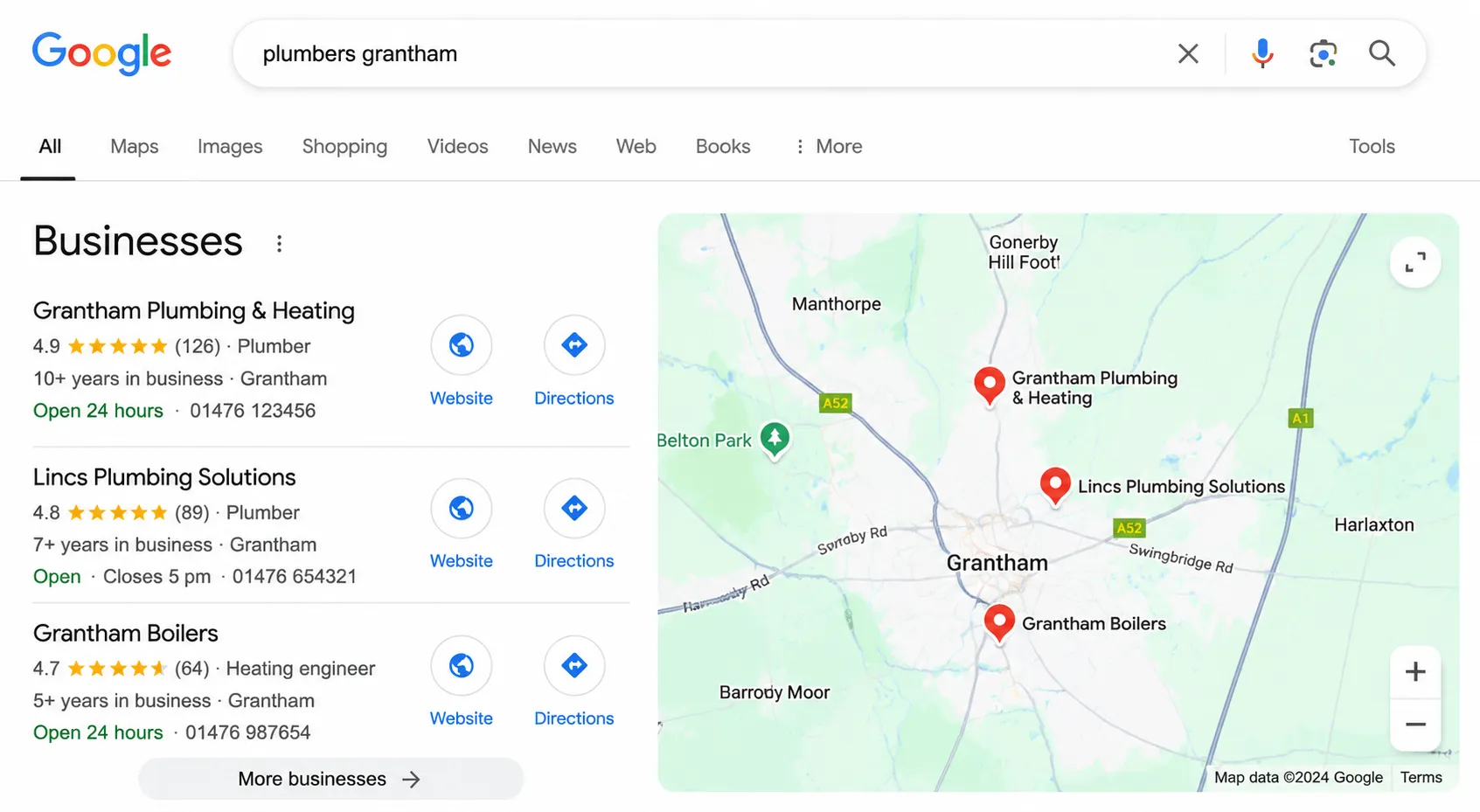
"Accountant in Grantham" is a search Google treats very differently to "accountant". It's a local pack query, which means the results page is dominated by a map, the three-pack of Google Business Profiles and a set of nearby practices. If your Google Business Profile is complete, categorised correctly (Accountant, Tax Preparation Service, Bookkeeping Service, all fit), and paired with a website that's clearly rooted in Grantham (address in the footer, Grantham on the About page, Grantham in a location-specific service page or two), you'll compete in that pack. If you're a generalist relying on "accountant" alone, you're up against national brands and paid ads, and you'll lose.

Niche specialism does the same job for keyword-based searches. "Accountant for dentists" and "accountant for landlords" and "accountant for tradespeople" are all lower-volume than "accountant" but hugely higher-intent, and they attract better clients on longer engagements. A page on your site that speaks directly to a dental associate, or a portfolio landlord, or a plumber running as a limited company, is a page that ranks and converts.

The strongest position, unsurprisingly, is both. Local plus niche. "Accountant for landlords in Grantham" is a page a national brand won't bother writing and a local generalist won't think to. It's yours if you want it.

We help firms find that positioning as part of the strategy work that comes before design. It's covered in more depth on our industries overview and worked through case by case in each of the pages under it.

What a strong accountancy website looks like in practice

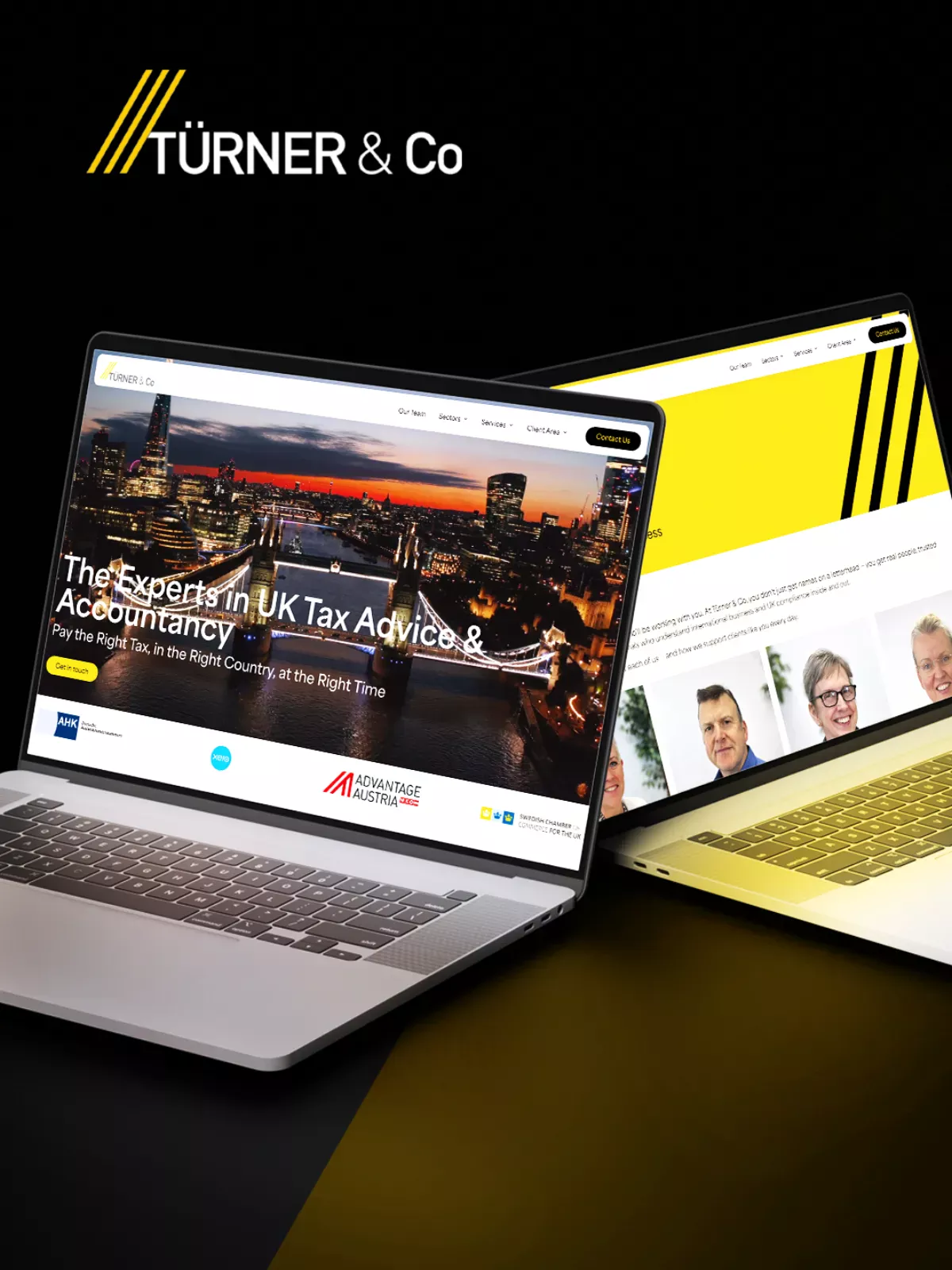
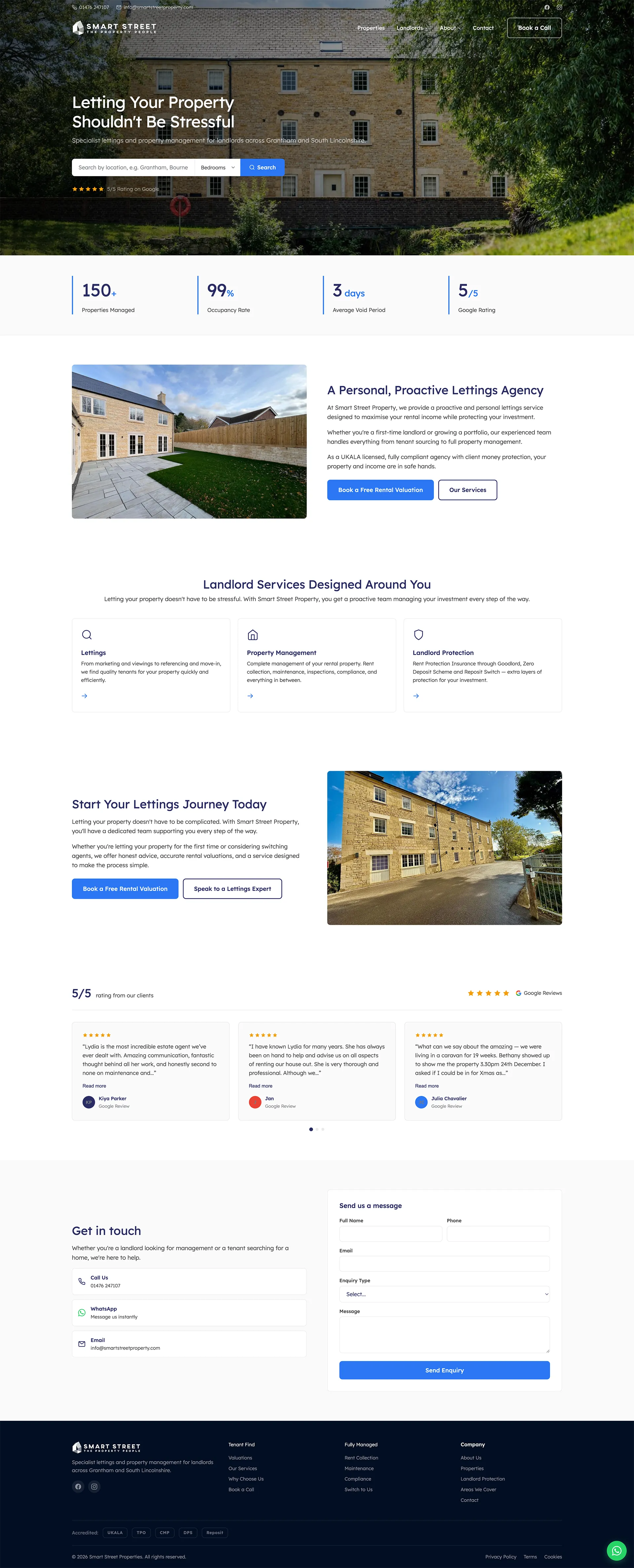
Pulling all of that together, here's the shape we build to. A homepage that says clearly who you help and how, with real social proof (Google reviews, named team members, verified body memberships). A dedicated page for each core service, each written to the search someone with that problem actually types. Sector pages for the client types you specialise in. An About page with real people, real qualifications, real photos and the office address you actually work from. A Fees or How We Work page that says enough to let prospects self-qualify without giving away the negotiation. A resources or blog area that publishes on real changes to tax and compliance as they happen, because that's where Google Discover and long-tail search live.

Underneath, the site should be quick, secure, MTD-literate, accessible (WCAG 2.2 AA is the working target), and structured with schema markup for AccountingService, LocalBusiness, FAQ and Article so search engines understand it properly. It should track enquiries so you know which pages generate them. It should integrate with your CRM or proposal tool if you use one.

Nothing on that list is exotic. It's what a serious firm's website should have. Most don't, which is why the ones that do stand out so easily.

How we work with accountancy practices

We start with a conversation about the firm rather than the website. Who do you serve now, who do you want to serve more of, what do the good clients have in common, where do the bad-fit enquiries come from. That's the strategy layer, and it drives everything else.

Then we plan the structure: which service pages, which sector pages, what goes on the homepage, what belongs in the footer, what needs to be in the header navigation and what can sit one layer down. We map that against real search demand so the site is built to catch the queries that convert.

Design comes next, and for accountancy it's about looking like a proper firm rather than a design studio. Clean, calm, considered, credible. Photography of your actual team wherever possible. Colour and typography that hold up on a phone at 6am and a desktop at 3pm.

Build is on WordPress, coded from scratch to keep it fast and maintainable, with the security posture described above and a staging environment we can iterate on. Launch is planned rather than sudden. Then we stay involved: SEO, Google Ads where it makes sense, hosting, maintenance and the sort of small ongoing changes that keep a site earning its keep. You deal with the people doing the work, not an account manager layer.

How We Help

Services for Accountants

Website design

Professional <a href="https://codesky.co.uk/website-design/">websites</a> for accountants, coded from scratch on WordPress, structured page-per-service to rank for the searches that bring in the clients you want.

Learn More

SEO

Local and specialist <a href="https://codesky.co.uk/seo/">SEO</a> targeting the real accountancy queries: town-based searches, MTD, self-assessment, VAT, limited company accounts and sector niches.

Learn More

PPC

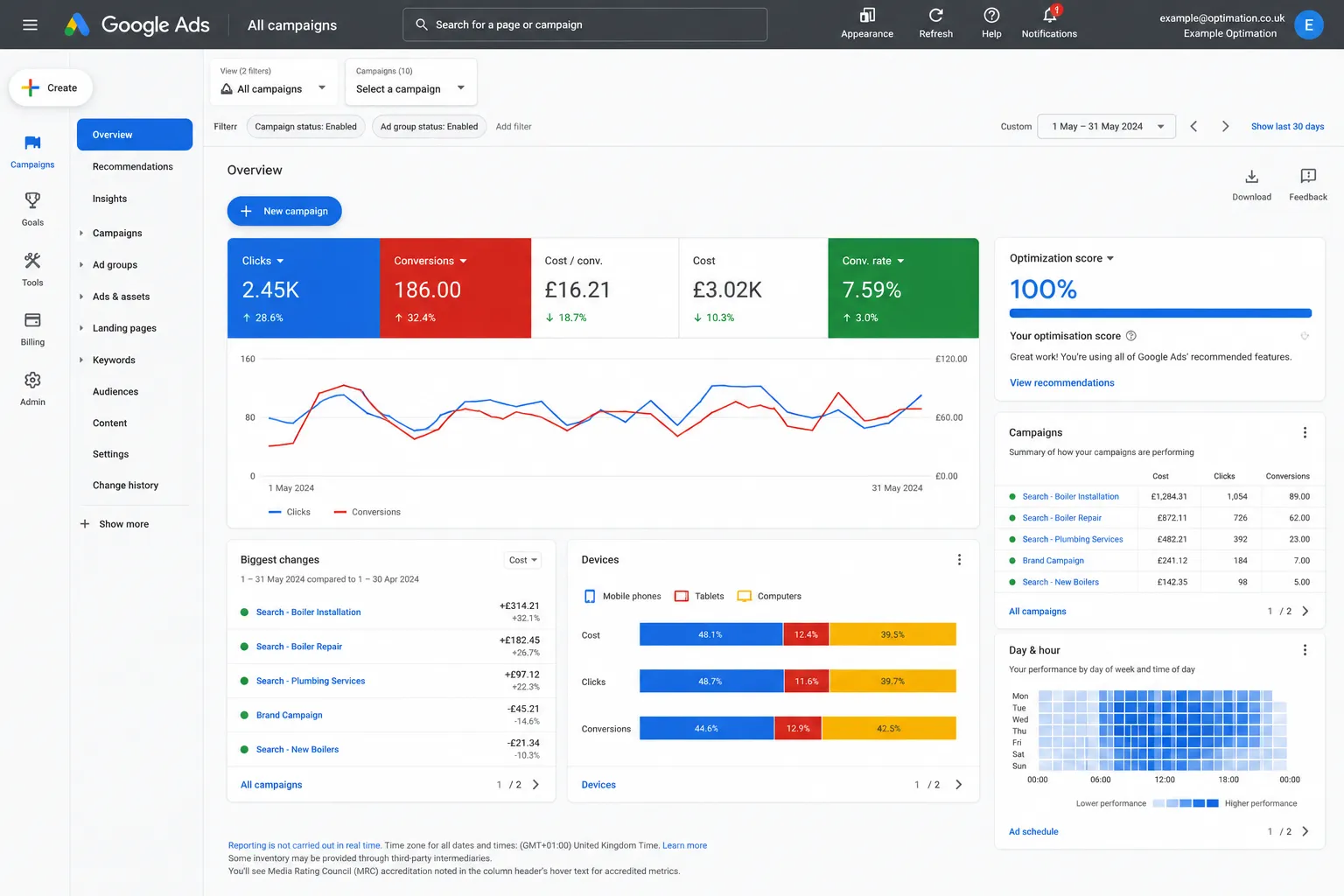
Targeted <a href="https://codesky.co.uk/ppc/">Google Ads</a> for firms who need qualified enquiries quickly in competitive local markets, run by a Google Ads certified team.

Learn More

FAQ

Frequently asked questions

01 Do you build websites for sole practitioner accountants as well as larger firms?

Yes. Whether you're a sole practitioner running from a home office or a multi-partner firm with specialist divisions, the approach scales. Smaller practices get a leaner build with the same structural thinking behind it; larger firms get sector pages, team bios, careers sections and the deeper integrations they need.

02 Can you help us rank for local accountancy searches?

Yes. Local searches like "accountant in [town]" and "small business accountant near me" are a primary acquisition channel for most practices. We work on the Google Business Profile, the technical foundations, the on-page content and the citations that make local search work. It's covered on our <a href="https://codesky.co.uk/seo/">SEO</a> page.

03 How do you handle ICAEW, ACCA and AAT logo and disclosure requirements?

We build to the current guidance from each body. That includes the correct logo variant, spacing rules, firm reference where required, and the disclosures around AML supervision, ICO registration and professional indemnity that regulated firms need to display. If we're unsure about a specific requirement we ask you or the body direct rather than guessing.

04 Is WordPress secure enough for an accountancy firm?

Yes, when it's set up properly. WordPress powers over 40 per cent of the web precisely because it's mature and well supported. The security posture depends on hosting, patching, two-factor logins, a web application firewall and backups. We build sites that sit comfortably inside a Cyber Essentials scope, and our managed hosting keeps them that way.

05 Do we need a separate page for every service?

For anything you want to attract work in, yes. A single services page listing self-assessment, VAT, payroll and accounts as bullets will not rank against firms that have proper pages for each. Page-per-service is the single biggest structural change we make on most accountancy websites, and it's usually the change that shifts enquiry volume.

06 Can you take over an existing website rather than rebuilding it?

Sometimes. If the existing site is technically sound and just needs strategy, content and SEO work, we can take it on as-is. If it's built on a platform that will hold you back (drag-and-drop builders, ageing themes, page speed problems), we'll be honest and recommend a rebuild. We won't lock you into a platform you can't move off.

07 How much does a website for an accountancy practice cost?

It depends on the scope: number of service pages, sector pages, integrations with your practice software, whether you need a client portal linked in, and how much content we write versus you supply. Give us a call on 0800 699 0037 or use the contact form and we'll give you a realistic figure after a short conversation about the practice.

08 Do you work with accountants outside Lincolnshire?

Yes. We're based in Grantham and we work with firms across the UK. Most of the process runs on video calls, screen shares and shared documents. If you'd rather meet in person, our office is on Floor 1, Lindpet House, Grantham, NG31 6LJ.

Ready to Talk About Your Accountancy Website?

A short call is the fastest way to work out whether we're a fit. No pitch deck, no pressure. If it's useful we'll carry on. If it isn't, you'll have a clearer picture of what your website should be doing either way.

Talk to Us About Your Practice